Off-Market Real Estate in Alberta: The Investor's Guide
Off-market real estate in Alberta is property sourced or marketed privately instead of through public MLS listings. Rental investors should verify leases, expenses, permitted use and financing alongside title and property condition. Check current registration costs and local obligations with appropriate professionals; private sourcing alone does not establish cash flow or investment value.
Alberta's Investor Advantages
Alberta offers a combination that's genuinely rare in Canadian real estate: no provincial land transfer tax (saving buyers $15,000–$40,000+ on typical purchases), no rent control (landlords can set rents to market rates), strong rental demand in both Calgary and Edmonton from energy sector, technology, and healthcare workers, and property prices that in many cases still generate positive cash flow from day one.
For investors coming from Ontario or BC, Alberta properties often require 50–60% less capital for comparable returns. The off-market community in Calgary and Edmonton is particularly active — experienced investors know what they want and transact before public competition inflates prices.
Calgary vs. Edmonton: Choosing Your Market
Calgary and Edmonton each serve different investor profiles. Calgary has seen stronger price appreciation, driven by population growth, technology sector development, and interprovincial migration from BC and Ontario. Properties in Calgary's inner-city neighbourhoods — Beltline, Bridgeland, Inglewood — have appreciated significantly while still generating cash flow.
Edmonton offers lower purchase prices with often better cash-on-cash returns. University of Alberta creates consistent rental demand. Edmonton is particularly well-suited for investors prioritizing cash flow over appreciation; Calgary for investors seeking both cash flow and capital growth.
Alberta's Legal Framework for Private Sales
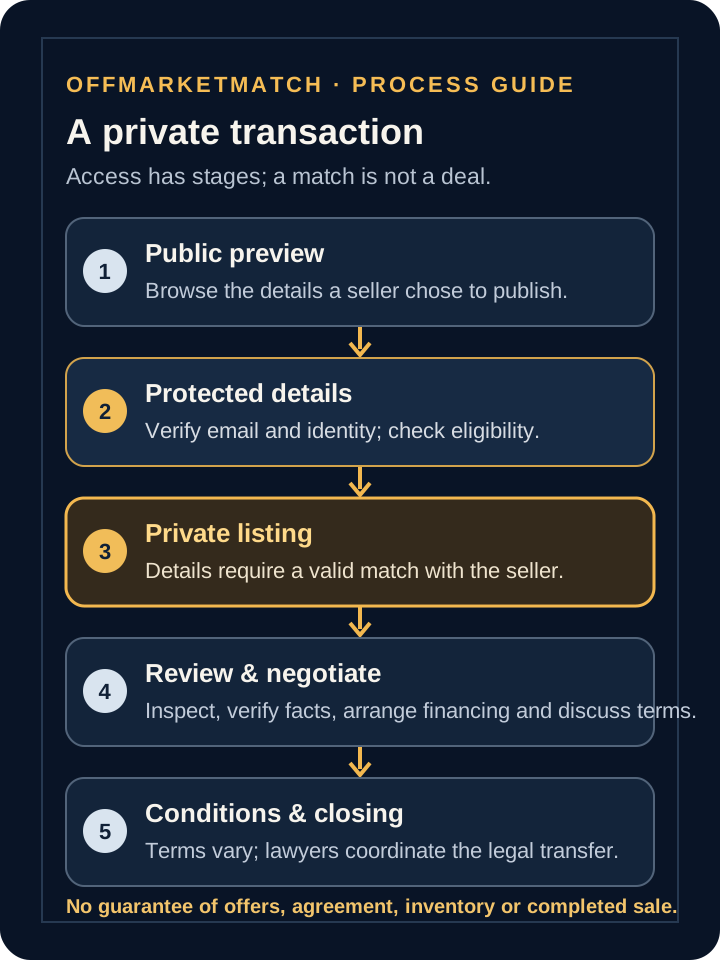
Alberta real estate is governed by the Real Estate Act. As in other provinces, the Act regulates licensed practitioners — it does not require their involvement in private transactions. Alberta private sales require: a written Agreement of Purchase and Sale, a real estate lawyer to handle title transfer and registration with the Alberta Land Titles Office, compliance with disclosure obligations (known material defects), and mortgage discharge management.
Alberta does not charge a provincial land transfer tax. There are, however, land title transfer fees charged by the province (much smaller than Ontario or BC LTT) — approximately $500–$800 on most residential purchases.
Revenue Properties: Alberta's Off-Market Sweet Spot
Revenue properties — basement suite homes, duplexes, triplexes, and small apartment buildings — are the most actively traded off-market asset class in Alberta. The reasons are straightforward: sellers want to avoid disrupting existing tenants with public showings; buyers want to evaluate the income stream without competing with retail buyers who may not understand investment property valuation; and developers want to assemble sites without telegraphing their plans publicly.
In Calgary and Edmonton, revenue properties frequently change hands between investors who know each other through networks and platforms — never appearing on public listing databases.
Oil Sands Worker Dynamics
Alberta's oil sands sector creates a unique real estate dynamic: workers who rotate between Edmonton-area residences and northern worksites (Fort McMurray, Peace River, Rainbow Lake) own properties as primary homes or long-term investments. When work assignments change or workers relocate, these properties are often sold quickly and privately — the sellers want speed and discretion rather than the drawn-out public listing process.
For buyers, these motivated sellers represent genuine opportunity: properties in good condition, owned by professionals, sold at fair value without the bidding competition of a public listing.
How do I check projected rental cash flow?
Use supported rents and expenses, then test financing and vacancy assumptions. For a hypothetical $2,000 monthly rent, annual gross income is $24,000 before operating costs and debt payments. That is not a profit estimate. Request leases and expense records, and verify the property's permitted use. An attractive headline return cannot compensate for missing evidence about income, repairs or financing.
What should I investigate about a secondary suite?
Confirm the relevant municipal approvals, safety requirements, insurance and financing treatment for the actual property. An advertisement calling a space a suite does not establish its status. Ask what records support the intended use and whether changes are needed. Price those changes with qualified local help. Do not build the purchase budget around rent from a unit you have not verified.
Which risks differ between Alberta locations?
Investigate the employment base, tenant demand, property condition and the management work needed in the specific community. Province-wide statements do not describe every neighbourhood or building. Compare a scenario using current documented occupancy with one allowing for vacancy and repairs. A hypothetical one-month vacancy reduces annual collected rent, even if the asking price initially looks attractive. Keep those assumptions visible in your comparison.
Does a private purchase remove other closing costs?
No. Ask your legal professional and lender for current estimates of registration, financing, legal and adjustment costs that apply to the transaction. The absence of one particular provincial tax is not the absence of all costs. Review existing tenancies and the agreed possession terms as well. Use actual documents and quotes before presenting the investment as ready to close or ready to rent.
Primary sources and further checks
These official references cover transaction preparation and the specific topics noted below. They are not evidence of off-market sales volume, a guaranteed saving or future property prices. Check current rules and obtain advice for your own transaction.
- Financial Consumer Agency of Canada: Buying a home
Housing costs, affordability and mortgage preparation.
- CMHC: Homebuying Step by Step
Planning, evaluating a home, making an offer and closing preparation.
- Alberta: Land titles
Ownership changes, title searches and land registration information.
Key Takeaways
- 1.Alberta has no provincial land transfer tax and no rent control — Canada's most investor-friendly combination
- 2.Calgary and Edmonton serve different investor profiles: Calgary for appreciation + cash flow, Edmonton for pure cash flow
- 3.Revenue properties (basement suite homes, duplexes, small apartments) are Alberta's most active off-market segment
- 4.Oil sands worker transitions create consistent motivated seller opportunities across the province
- 5.Private transactions in Alberta use the same legal framework as other provinces — lawyers, not agents, are the required professionals
Do This Week
If you're an investor, calculate what your current capital would generate in an Alberta revenue property versus your current market. The difference in cash-on-cash returns is often dramatic — and the off-market access is how you find the right property before it becomes a bidding war.
Get Started on OffMarketMatchRelated Academy Articles
How Real Estate Investors Find Off-Market Deals in Canada
Off-Market Multifamily Investing in Canada
The Complete Guide to Off-Market Real Estate in Canada
How to Buy Property Before It Hits MLS in Canada
How Private Real Estate Transactions Work in Canada
Ready to Put This Into Practice?
Join OffMarketMatch and access Canada's private real estate market — verified buyers, private sellers, no agent required.