How Private Real Estate Transactions Work in Canada
A private real estate transaction moves from buyer discovery to property review, a written offer, negotiation, conditions and legal closing. Keeping a property off MLS changes its marketing, not the need to verify ownership or meet legal obligations. Decide who handles each task and which documents can be shared safely.
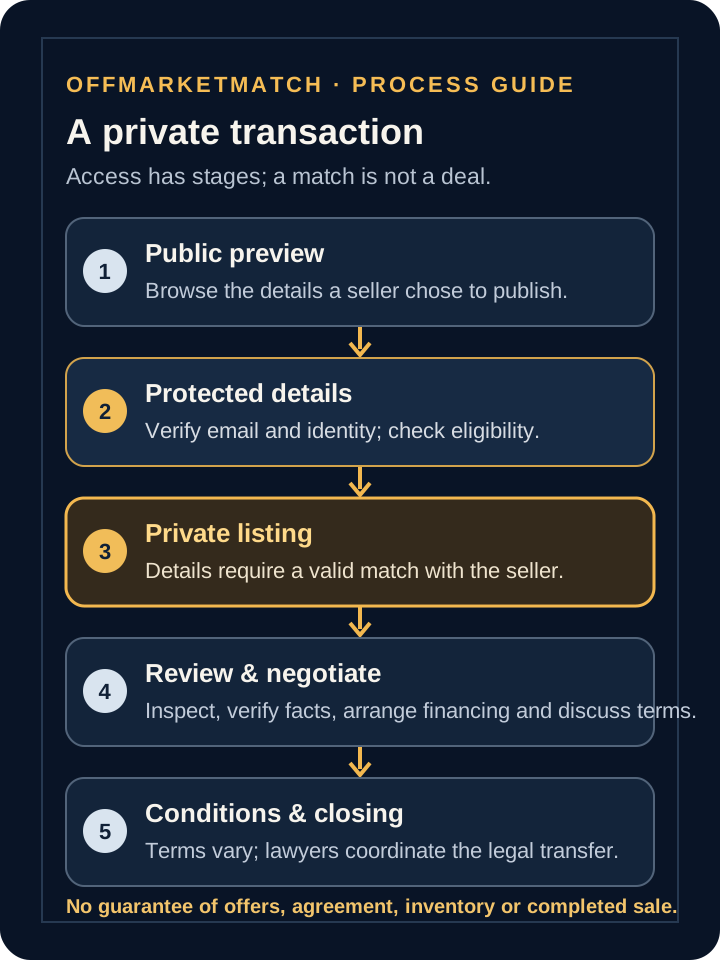
The Legal Framework Is Identical to MLS
The most important thing to understand about private real estate transactions: the legal process is the same whether a property is found on MLS or through a private platform. The Agreement of Purchase and Sale (APS) is a standard provincial document. Title transfer, mortgage registration, and closing procedures are handled by your lawyer identically.
What changes in a private transaction is the discovery process, the negotiation dynamic, and the cost structure — not the legal framework.
Buyer's Side: What You Need
Before you engage with a private seller, have your ducks in a row: a current mortgage pre-approval from your lender (typically valid for 90–120 days), a retained real estate lawyer who can review offers quickly, and your identity verification completed on whatever platform you're using.
On OffMarketMatch, buyers also complete a Know Your Customer (KYC) verification process before accessing seller contact information. This protects sellers and signals to them that you're a serious, vetted buyer — a meaningful advantage in private negotiations.
The NCNDA: Why It Matters
In private transactions, sellers often require buyers to sign a Non-Circumvention, Non-Disclosure Agreement (NCNDA) before receiving detailed property information or the seller's contact details. This protects the seller's privacy and prevents buyers from sharing property information with competitors.
The NCNDA is a standard document in private real estate. Signing one doesn't commit you to purchasing — it simply confirms that you'll protect the seller's confidential information. OffMarketMatch facilitates this document automatically as part of the buyer-seller connection process.
The Negotiation Advantage
Private negotiations are fundamentally different from MLS offer nights. Without a competing-offer deadline, buyers and sellers have time to negotiate thoughtfully rather than reactively. You can ask questions, request additional information, and structure an offer that works for both parties — without the artificial pressure of a 24-hour offer window.
This dynamic tends to produce better outcomes for both sides: sellers get a serious buyer who's genuinely committed, and buyers can negotiate terms (closing date, included chattels, condition timelines) that work for their specific situation.
Conditions and Due Diligence
A private sale offer should include conditions that protect you: financing approval (typically 5 business days minimum), home inspection (scheduled during the conditional period), and lawyer review of title and documents. These conditions are fully negotiable in a private sale — unlike some MLS offer nights where conditions are strategically waived to win the bid.
Use the conditional period to complete proper due diligence. Order a home inspection from a qualified inspector. Have your lawyer conduct a title search and flag any liens, easements, or title issues. Review any relevant disclosure documents provided by the seller.
Closing: What Happens and When
Once conditions are waived and the deal is firm, your lawyer and the seller's lawyer coordinate closing. Approximately 5 business days before closing, your lawyer will provide a Statement of Adjustments detailing the final numbers including property tax adjustments, remaining deposits, and any other costs.
On closing day, funds are transferred to the seller and title is registered in your name at the provincial land registry. Your lawyer provides you with the keys and title confirmation. The entire process from accepted offer to possession is whatever timeline you and the seller agreed to — typically 30–90 days.
Which milestones should both parties track?
Track the accepted agreement, deposit deadline, condition dates, financing requirements and closing preparations. Assign responsibility for each item and preserve the related documents. An online workflow can organize those milestones but does not decide whether a legal condition has been satisfied. Ask your closing professional how notices and approvals must be delivered under the agreement.
How should we handle a changed closing date?
Discuss the reason and the consequences for both parties before agreeing. A date change may affect financing, insurance, occupancy and another purchase. Put the agreed amendment in the required written form and have it reviewed. Do not assume a message saying that a delay is acceptable has amended every related contractual obligation or notice requirement.
What if one party cannot complete a condition?
Read the condition and notice provisions instead of assuming the transaction automatically continues or ends. The available options depend on the agreement and circumstances. Obtain advice before waiving a condition or demanding release of the deposit. Keep the relevant evidence and dates. A clear record supports informed decisions; it does not itself resolve the parties' legal rights.
When is the transaction actually complete?
Your authorized closing professional should confirm completion of the required funds and title steps. Signing an agreement, exchanging messages or marking a deal stage complete is not the same as legal closing. Before the date, verify payment instructions and required documents through established contact channels. Afterward, retain the closing records and deal with possession according to the agreed terms.
Primary sources and further checks
These official references cover transaction preparation and the specific topics noted below. They are not evidence of off-market sales volume, a guaranteed saving or future property prices. Check current rules and obtain advice for your own transaction.
- Financial Consumer Agency of Canada: Buying a home
Housing costs, affordability and mortgage preparation.
- CMHC: Homebuying Step by Step
Planning, evaluating a home, making an offer and closing preparation.
Key Takeaways
- 1.The legal framework for private transactions is identical to MLS — same APS, same closing process, same lawyer requirements
- 2.Buyers need: current mortgage pre-approval, retained lawyer, and completed identity verification before engaging private sellers
- 3.NCNDAs are standard in private real estate and protect seller privacy without committing the buyer to purchase
- 4.Private negotiations allow thoughtful, timeline-flexible deal structuring without artificial competing-offer pressure
- 5.Conditions for financing, inspection, and lawyer review are fully negotiable in private sales
Do This Week
Retain a real estate lawyer now — before you find your next property. Having legal representation on standby means you can review offers and move quickly when an off-market opportunity appears. Most real estate lawyers don't charge for an initial consultation.
Get Started on OffMarketMatchRelated Academy Articles
How to Buy Property Before It Hits MLS in Canada
Are Off-Market Real Estate Deals Legal in Canada?
How Private Home Sales Work in Canada
How Real Estate Investors Find Off-Market Deals in Canada
Off-Market Multifamily Investing in Canada
Ready to Put This Into Practice?
Join OffMarketMatch and access Canada's private real estate market — verified buyers, private sellers, no agent required.