Are Off-Market Real Estate Deals Legal in Canada?
Off-market property transactions can be lawful in Canada: a public MLS listing is not the same thing as a legal requirement to sell. The applicable provincial rules, disclosure duties, buyer eligibility and signed agreements still govern the transaction. Ask a qualified local legal professional about your property and circumstances.
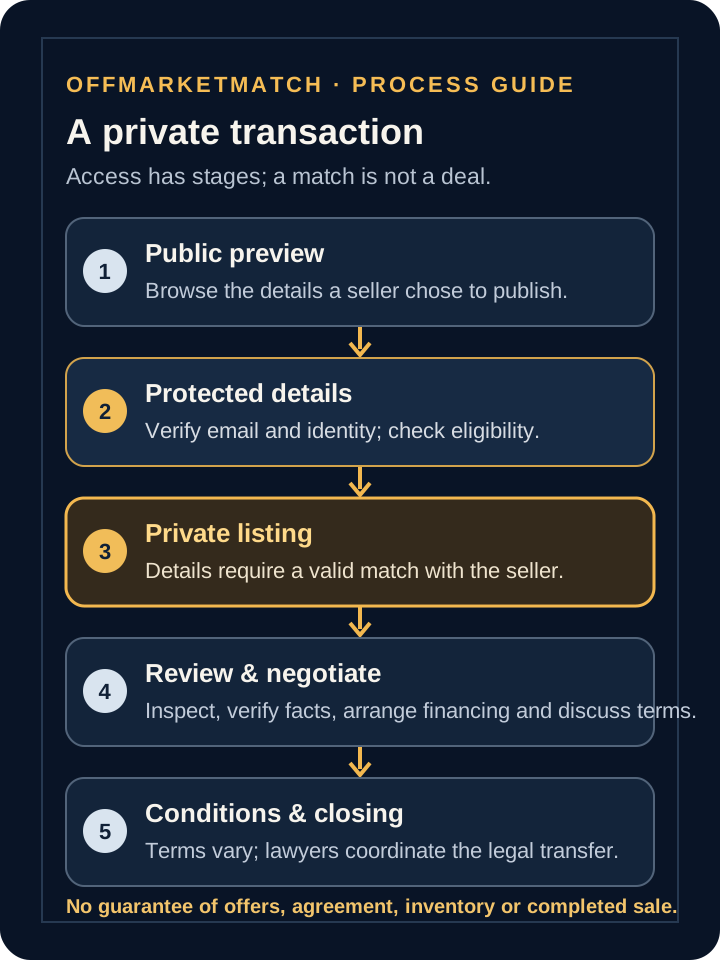
The Foundation: What the Law Actually Requires
In Canada, real estate transactions require three things at minimum: a binding agreement (the Agreement of Purchase and Sale), title transfer registered with the provincial land registry, and a lawyer (or notary in Quebec) to handle the legal mechanics of the transfer.
That's it. An agent is not legally required. An MLS listing is not legally required. There is no law in any Canadian province or territory that compels a seller to list on MLS or to use a licensed real estate agent.
The Role of Real Estate Agents in Law
Real estate agents are licensed under provincial legislation — for example, REBBA in Ontario, RESA in BC, or the Real Estate Act in Alberta. These acts regulate what licensed agents must do when they are involved in a transaction. They do not require agents to be involved.
If you hire an agent, REBBA requires them to act in your best interest, disclose conflicts, and follow specific procedural rules. If you don't hire an agent — which is your right — those rules simply don't apply to your transaction.
What MLS Is and Why You Don't Have to Use It
MLS (Multiple Listing Service) is a database operated by the Canadian Real Estate Association (CREA) and its member boards across Canada. Access to MLS for listing purposes is restricted to licensed agents who are members of a local real estate board.
You, as a private seller, cannot list directly on MLS — but you are under no legal obligation to use MLS. Private platforms like OffMarketMatch operate entirely outside the MLS framework and are perfectly legal. You're simply choosing a different channel to find buyers.
Tax and Disclosure Obligations
Legal compliance in a private sale extends beyond the transaction itself. Sellers must: disclose known material defects to buyers (the standard varies by province but the principle is universal), comply with their mortgage discharge obligations with their lender, report the sale properly for income tax purposes (primary residences qualify for the Principal Residence Exemption; investment properties have capital gains implications), and pay any applicable land transfer taxes — which apply to all transfers regardless of channel.
The NCNDA and Privacy Protections
A common element in private transactions is the Non-Circumvention, Non-Disclosure Agreement (NCNDA). This document — signed by the buyer before receiving sensitive seller information — protects the seller's privacy and prevents the buyer from sharing property details with others.
NCNDAs are standard contractual documents, not regulated by real estate legislation. They're enforceable as private contracts. OffMarketMatch generates NDAs automatically as part of its buyer-seller connection protocol.
Common Legal Questions
Can an owner sell privately with an active mortgage? A mortgage may need discharge or another lender arrangement at closing; ask the lender and legal adviser about costs and conditions.
Does a private seller need to notify the lender? Check the mortgage agreement and lender requirements; private marketing does not waive contractual obligations.
Can a buyer finance a private purchase? A lender assesses the borrower, property and proposed transaction; ask about the evidence and conditions needed before making a firm commitment.
Does private marketing remove compliance checks? The applicable disclosure, identification and other legal obligations still need review; ask each professional which requirements apply to their role and your transaction.
Does private marketing change the legal closing process?
No. Marketing outside MLS does not remove the need to address title, financing, taxes and the obligations in the purchase agreement. The legal professionals involved and the required steps vary by jurisdiction. Ask a qualified local lawyer or other authorized closing professional to explain the process for your property. An online platform cannot replace that review with a general statement that private selling is legal.
What if an intermediary is arranging the transaction?
Ask what role the intermediary is taking and what authority or licence may be required for that activity. Introducing parties, assigning a contract and representing another person are not interchangeable descriptions. The answer depends on local law and the actual work performed. Have the proposed arrangement reviewed before paying a fee or signing. Do not assume avoiding MLS avoids regulation.
Which situations need extra legal attention?
Seek advice early when an estate, corporation, power of attorney, tenanted property or multiple owners are involved. Each can introduce questions about authority, consent, disclosure and timing. Request the documents appropriate to the situation. A successful identity check does not prove a person has authority to sell the property or to bind every owner to the proposed agreement.
Can a template tell me whether my deal complies?
A template can help organize information, but it cannot determine every legal issue in a specific transaction. Check the property's jurisdiction, the parties' roles and any unusual terms with a qualified adviser. Do not sign acknowledgements for documents you have not read or cannot open. Use the agreement actually intended for the transaction, and preserve the final reviewed version and amendments.
Primary sources and further checks
These official references cover transaction preparation and the specific topics noted below. They are not evidence of off-market sales volume, a guaranteed saving or future property prices. Check current rules and obtain advice for your own transaction.
- Financial Consumer Agency of Canada: Buying a home
Housing costs, affordability and mortgage preparation.
- CMHC: Homebuying Step by Step
Planning, evaluating a home, making an offer and closing preparation.
Key Takeaways
- 1.Off-market real estate transactions are 100% legal in all 13 Canadian provinces and territories
- 2.Only a lawyer (or notary in Quebec) is legally required — agents and MLS listings are optional
- 3.Land transfer taxes, mortgage discharge obligations, and income tax reporting apply regardless of sale channel
- 4.NCNDAs are standard contractual documents that protect seller privacy in private transactions
- 5.Buyers can use traditional mortgages to finance privately purchased properties
Do This Week
Look up the name and contact information for two or three real estate lawyers in your city. Having their information readily available means you can move quickly when you're ready to transact — private or public.
Get Started on OffMarketMatchRelated Academy Articles
How Private Home Sales Work in Canada
Why More Canadian Homeowners Are Selling Privately
Off-Market vs. MLS: Which Is Right for Your Real Estate Transaction?
Why More Canadians Are Selling Privately — and What It Means for the Market
The Hidden Real Estate Market Nobody Talks About
Ready to Put This Into Practice?
Join OffMarketMatch and access Canada's private real estate market — verified buyers, private sellers, no agent required.