What Is a Pocket Listing?
A pocket listing is a property offered to a limited network rather than broadly marketed on MLS. An owner or an agent may share it with selected buyers. Restricted exposure can support privacy but reduce the buyer pool; representation agreements, disclosure duties and local rules still need careful review.
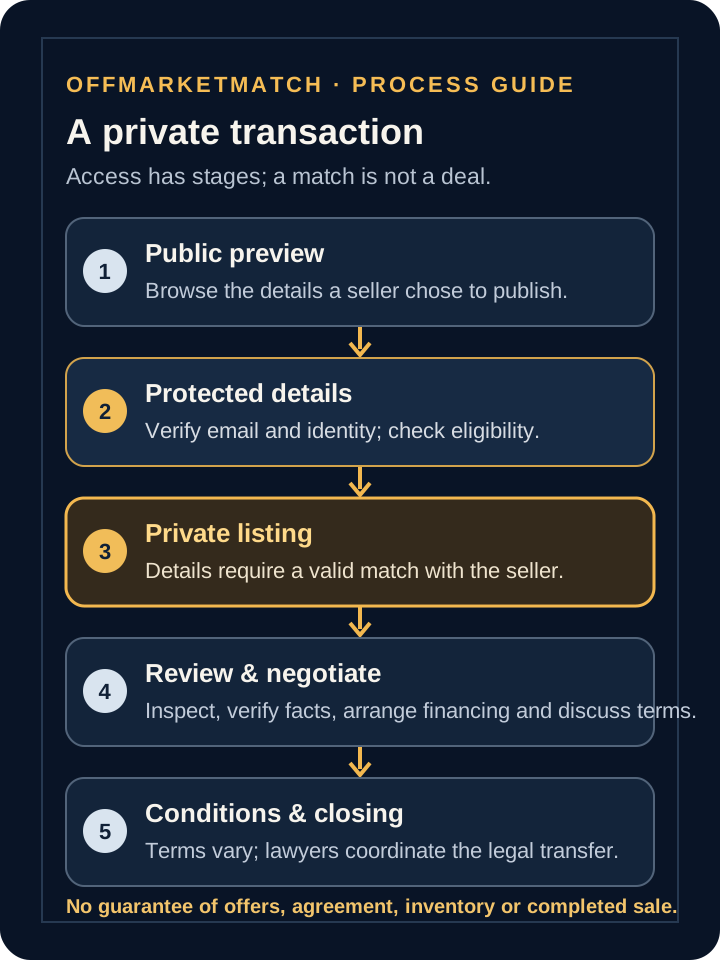
Defining a Pocket Listing
A pocket listing is a property that an agent is actively marketing to buyers — but through private channels rather than MLS. The property is "in the agent's pocket" rather than on public display. The agent might call their buyer clients directly, share details in an agent network, or post in a private group — all before (or instead of) a public MLS listing.
In the traditional sense, pocket listings involve an agent acting as the intermediary. But the broader concept — a property being matched to buyers through private rather than public channels — is the same principle behind OffMarketMatch, where the platform itself facilitates the private matching rather than a single agent's network.
Why Do Sellers Choose Pocket Listings?
Sellers choose pocket listings for the same reasons they choose any private transaction: privacy, control, and timeline flexibility. A seller who isn't sure whether they want to sell might ask their agent to quietly test the market with a few buyer contacts before committing to a full MLS listing. A seller going through a sensitive life event might want to avoid public exposure.
High-end sellers frequently prefer pocket listings — the idea of a $3M home being toured by unqualified lookers after an MLS listing is genuinely unappealing. Pre-qualifying buyers through a private process before showing a luxury property is simply more appropriate.
The Agent's Conflict of Interest
Here's the honest complexity: when a real estate agent handles a pocket listing, they often have an incentive to find a buyer in their own network — which earns them both the listing and buying commission. This double-commission situation (called "dual agency") creates a potential conflict where the agent benefits financially from keeping the listing private and limiting the buyer pool to people they already know.
Canada has rules around dual agency disclosure, but the conflict of interest remains real. This is one reason why sellers who want private transactions are increasingly turning to private platforms rather than relying on agent-controlled pocket listings. OffMarketMatch connects sellers directly with buyers without an intermediary who has competing financial interests.
Pocket Listings vs. Direct Private Sales
A pocket listing still involves an agent — you're still paying commissions, you're still subject to the agent's judgment about which buyers to contact, and you're still relying on the agent's network rather than a broader private marketplace.
A direct private sale through OffMarketMatch is different: no agent, no commissions on the seller side, access to a national pool of verified buyers who have self-selected based on their own criteria, and direct communication between seller and buyer (with appropriate privacy protections).
Are Pocket Listings Common in Canada?
Yes, though the prevalence varies by market. In tight markets like Vancouver and Toronto, pocket listings are common for luxury and investment properties. High-demand neighbourhoods in Ottawa, Calgary, and Halifax also see significant pocket listing activity.
With platforms like OffMarketMatch, the concept has evolved: sellers no longer need an agent's network to access a private buyer pool. The private marketplace has moved beyond the agent's contact list to a structured, national platform.
Does a pocket listing mean the price is lower?
No. A private marketing arrangement describes how the property is offered, not whether the asking price is reasonable. Compare the property, condition, tenancy and financing requirements with relevant alternatives. A seller may prioritize discretion without accepting a discount. Treat any suggested saving as a claim to check, not an automatic benefit of finding a property outside public MLS searches.
How do I know whether the seller can accept an offer?
Ask who owns the property and who has authority to sign. An intermediary's introduction is not proof of ownership or an exclusive right to sell. Your legal professional can advise on title, representation agreements and the documents needed for the situation. Be especially careful when a corporation, estate, power of attorney or multiple owners are involved in the proposed sale.
What if a listing is also being marketed elsewhere?
Ask directly about other marketing channels and any existing brokerage agreement. A property described as private may still be available through another route. Clarify whether other offers are expected and how you will receive updates. Do not assume exclusivity from the word pocket. Record the seller's answers and discuss any compensation or representation questions with your own adviser.
Which information should I request before spending money?
Start with enough details to identify the property and evaluate its fit. Request authorized evidence about condition, title, tenancy and major expenses as the discussion progresses. Avoid sending sensitive personal documents to an unverified contact. Decide what would make you stop investigating. A clear information checklist helps you avoid paying for inspections or financing work before basic ownership and access questions are answered.
Primary sources and further checks
These official references cover transaction preparation and the specific topics noted below. They are not evidence of off-market sales volume, a guaranteed saving or future property prices. Check current rules and obtain advice for your own transaction.
- Financial Consumer Agency of Canada: Buying a home
Housing costs, affordability and mortgage preparation.
- CMHC: Homebuying Step by Step
Planning, evaluating a home, making an offer and closing preparation.
Key Takeaways
- 1.A pocket listing is a property marketed privately through an agent's network rather than MLS
- 2.Sellers choose them for privacy, control, and timeline flexibility — the same reasons as direct private sales
- 3.Agent-handled pocket listings create a potential dual-agency conflict of interest worth understanding
- 4.Private platforms like OffMarketMatch offer the same benefits without the agent conflict of interest
- 5.Pocket listings are common in luxury markets across Toronto, Vancouver, Ottawa, and Calgary
Do This Week
If you're working with an agent who suggests a pocket listing, ask them directly: 'Do you plan to show this to buyers in your own network? Would you earn both sides of the commission?' The answers will tell you a lot about whether their interests align with yours.
Get Started on OffMarketMatchRelated Academy Articles
Should You Sell Your House Off Market?
Why More Canadian Homeowners Are Selling Privately
Off-Market vs. MLS: Which Is Right for Your Real Estate Transaction?
Pros and Cons of Selling Your Home Without MLS
How Private Home Sales Work in Canada
Ready to Put This Into Practice?
Join OffMarketMatch and access Canada's private real estate market — verified buyers, private sellers, no agent required.